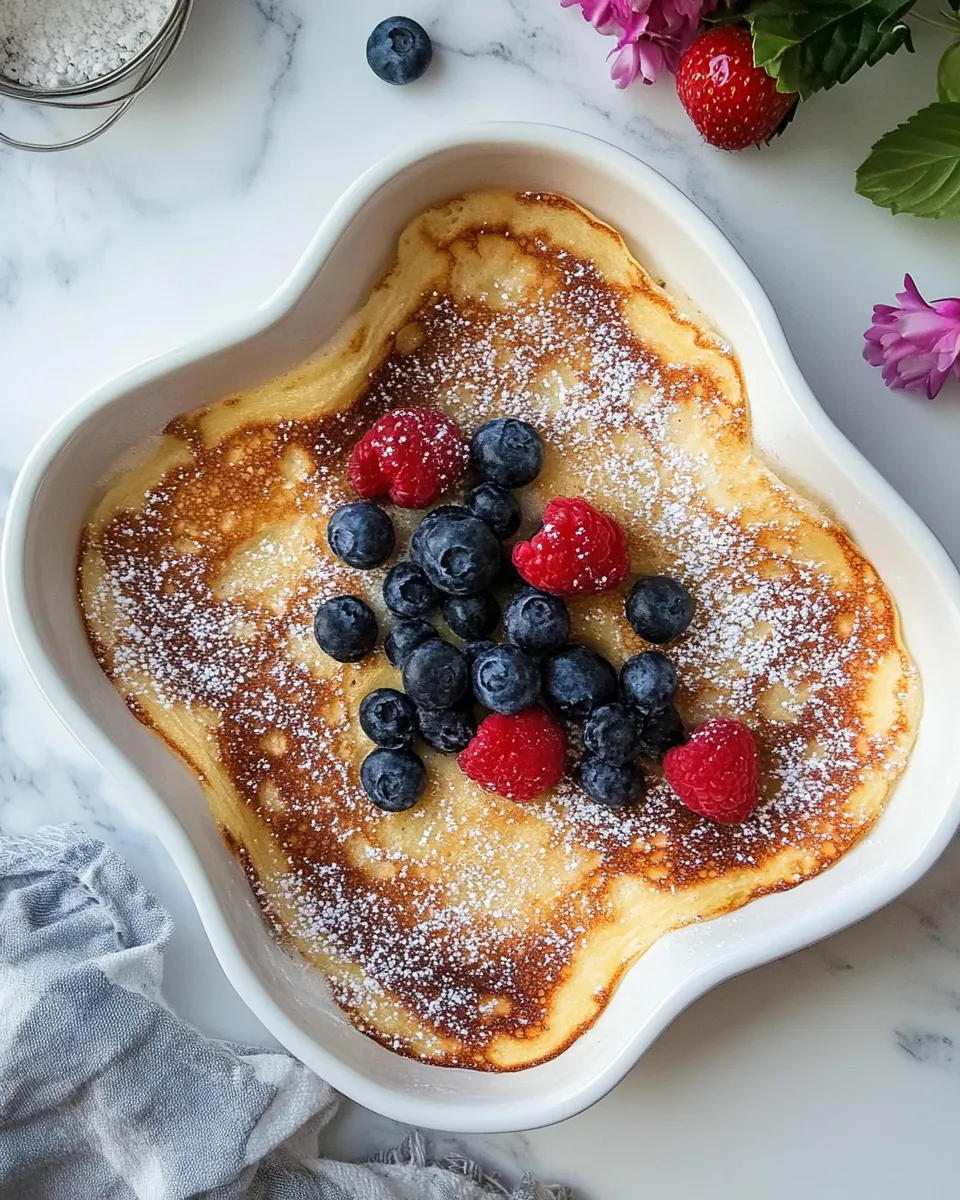
German Pancake
There’s something utterly magical about a German pancake. This delightful dish, often referred to as a Dutch baby, is known for its impressive rise and light, airy texture. With a golden exterior and a custard-like interior, it’s simple to prepare and perfect for breakfast, brunch, or even dessert. The best part? You likely have all the ingredients on hand, making it an easy go-to for any occasion. So, let’s dive into the world of German pancakes and discover how to create this stunning dish in your own kitchen.
What Makes This Recipe Special
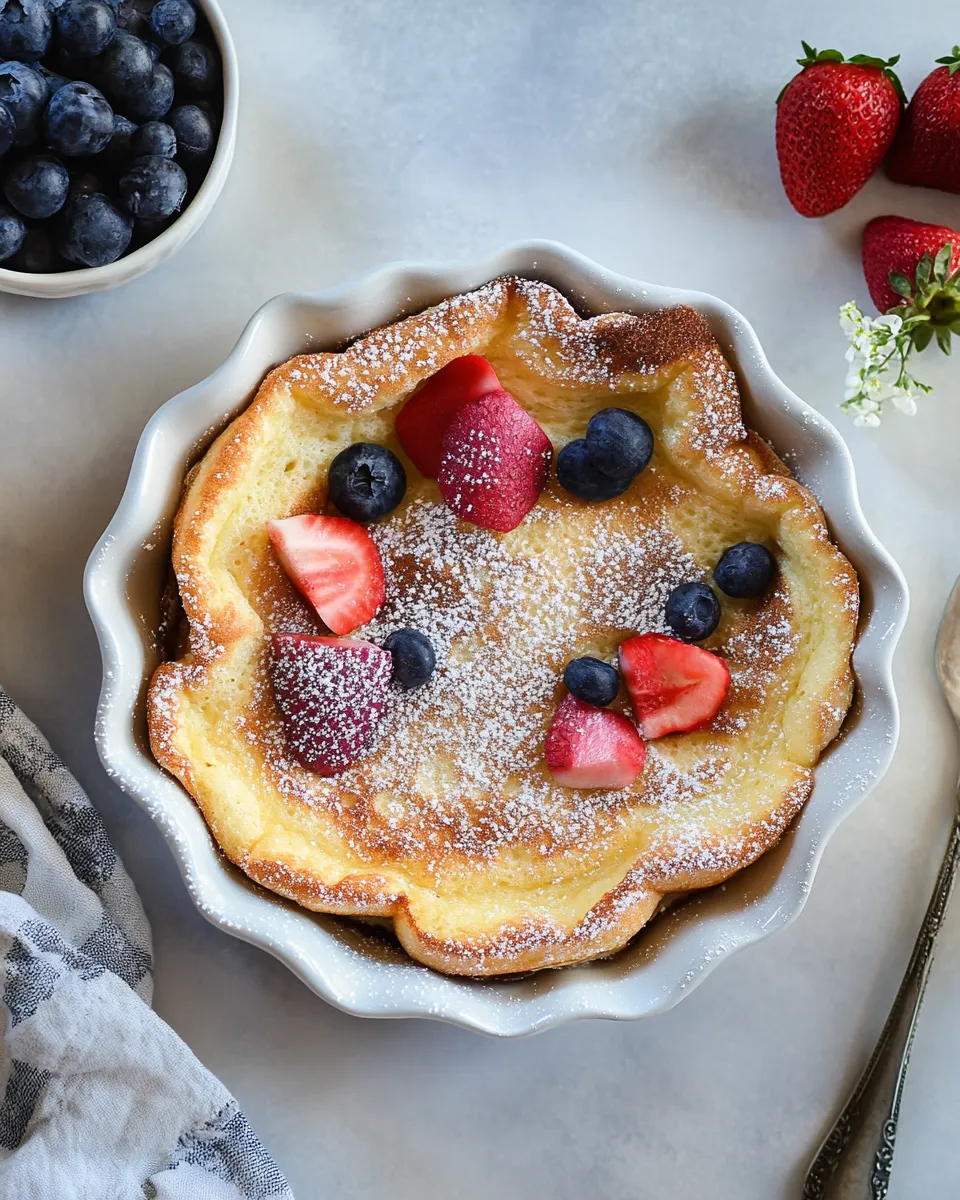
What sets this German pancake apart is its simplicity and versatility. Unlike traditional pancakes that require flipping, this recipe bakes in the oven, allowing you to focus on other things while it puffs up to perfection. The flavor profile is rich and buttery, complemented by the subtle sweetness from the vanilla and sugar. You can dress it up with fresh fruits, syrup, or powdered sugar, making it a delightful centerpiece for any meal.
The Ingredient Lineup
To make the perfect German pancake, you’ll need the following ingredients:
- 3 tablespoons unsalted butter – This adds richness and helps create that lovely golden color.
- 4 large eggs – These will give the pancake its structure and help it rise.
- 1 cup milk (anything but skim) – Whole or 2% milk works best for a creamy texture.
- 1/2 teaspoon salt – A pinch of salt enhances the overall flavor.
- 1/2 teaspoon vanilla extract – This adds a warm, inviting aroma.
- 1 tablespoon granulated sugar – Just the right amount to balance the flavors.
- 1 1/4 cups (176g) all-purpose flour (scoop and level to measure) – This is the base of your pancake, providing structure.
Hardware & Gadgets
Before you get started, make sure you have the following kitchen essentials:
- Oven-safe skillet – A cast iron skillet works beautifully, but any oven-safe pan will do.
- Mixing bowl – For combining your ingredients smoothly.
- Whisk – To beat the eggs and mix the batter until smooth.
- Measuring cups and spoons – Accurate measurements are key to success.
Mastering German Pancake: How-To
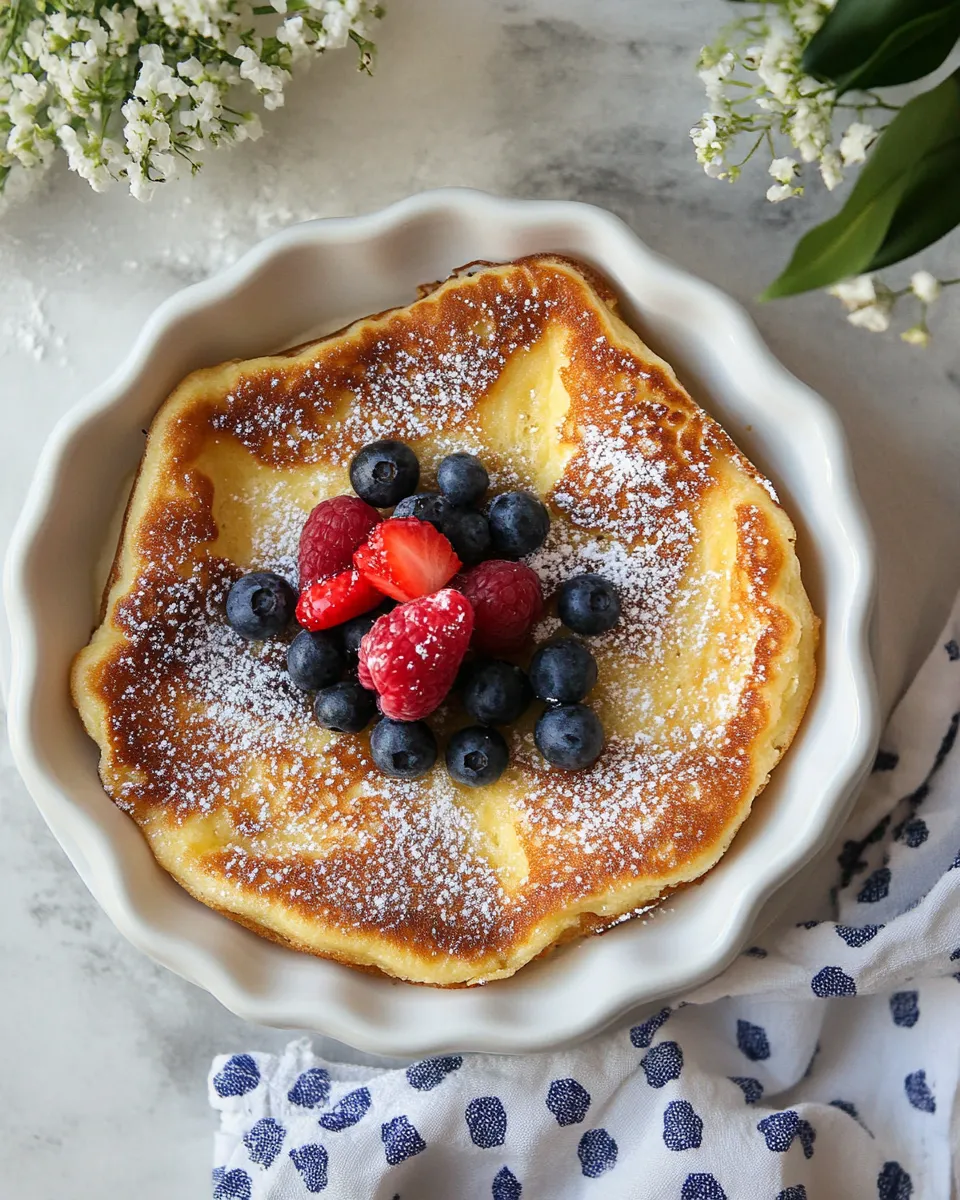
Now that you have your ingredients and equipment ready, it’s time to master the art of making a German pancake. Follow these steps for a delicious result:
Step 1: Preheat the Oven
Preheat your oven to 425°F (220°C). This high temperature is essential for that perfect puff.
Step 2: Prepare the Skillet
Place your skillet in the oven while it preheats. Add the 3 tablespoons of unsalted butter to the skillet so it melts and starts to bubble, creating a lovely golden crust.
Step 3: Mix the Batter
In a mixing bowl, whisk together the 4 large eggs, 1 cup of milk, 1/2 teaspoon of salt, 1/2 teaspoon of vanilla extract, and 1 tablespoon of granulated sugar until well combined. Gradually add in the 1 1/4 cups of all-purpose flour, whisking until you achieve a smooth batter.
Step 4: Combine and Pour
Once the butter is melted and bubbling, carefully remove the skillet from the oven (it will be hot!). Pour the batter directly into the skillet over the melted butter.
Step 5: Bake
Return the skillet to the oven and bake for 20-25 minutes, or until the pancake is puffed and golden brown around the edges. Resist the urge to open the oven door during baking; this will help the pancake rise beautifully.
Step 6: Serve and Enjoy
Once done, remove the skillet from the oven. The pancake will start to deflate slightly, which is normal. Slice it into wedges and serve immediately with your favorite toppings such as fresh fruits, syrup, or a dusting of powdered sugar.
Seasonal Ingredient Swaps
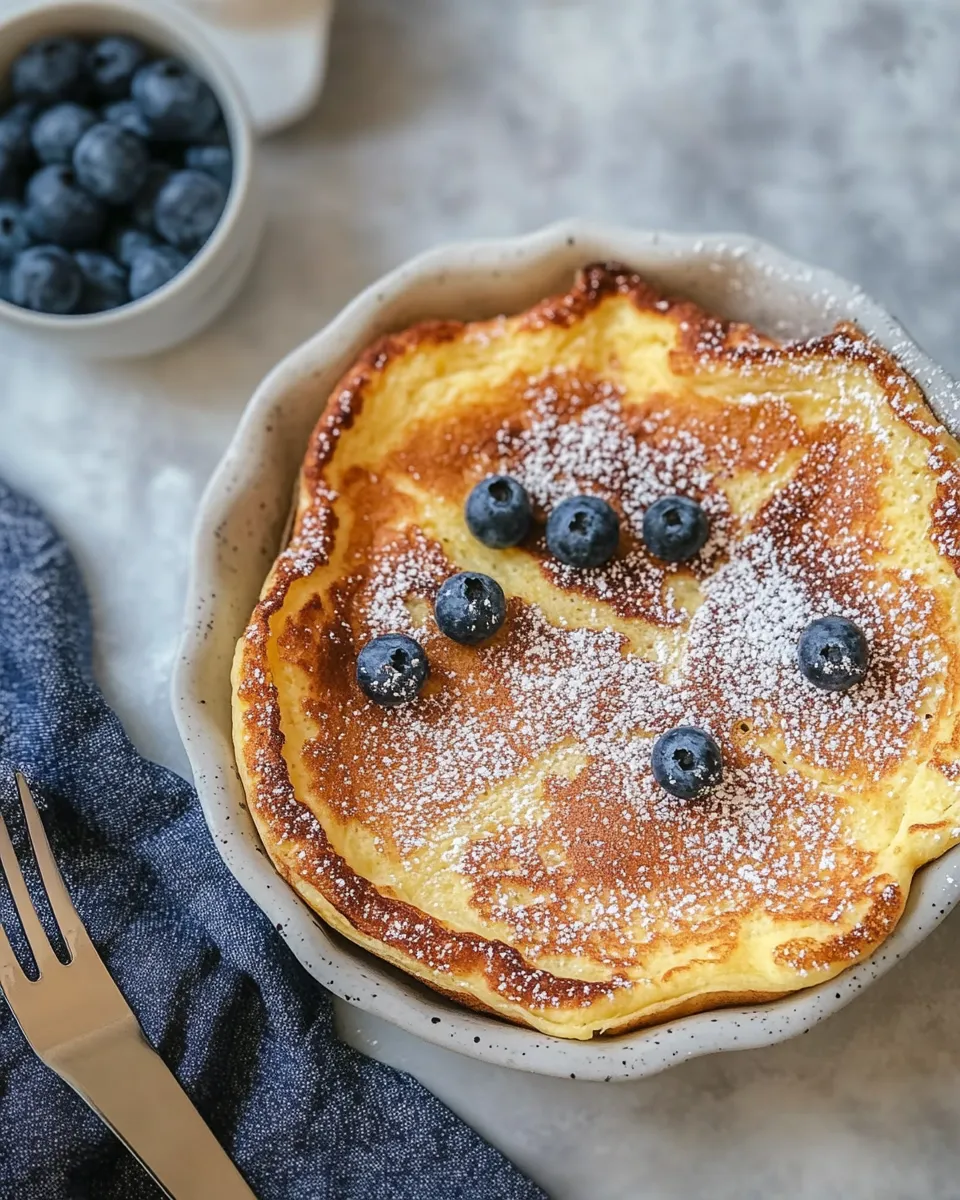
This German pancake recipe is incredibly adaptable. Here are some seasonal swaps you can try:
- Spring: Top with fresh strawberries or blueberries for a burst of color.
- Summer: Use peaches or nectarines for a sweet, juicy addition.
- Fall: Add a sprinkle of cinnamon and serve with roasted apples or pears.
- Winter: Cranberries and a drizzle of honey create a festive touch.
Behind the Recipe
The origins of the German pancake can be traced back to the 19th century in the United States, where it was likely influenced by traditional recipes from Germany. Its unique cooking method, where the batter is poured into a hot skillet, allows it to puff up dramatically. This style of pancake is often enjoyed in many households, perfect for brunch gatherings or special occasions. The simplicity of the recipe makes it accessible to novice cooks, while its stunning presentation impresses seasoned chefs.
Storage Pro Tips
If you happen to have leftovers (which is rare!), here are some storage tips:
- Refrigeration: Store any leftover German pancake in an airtight container in the refrigerator for up to 3 days.
- Reheating: To reheat, place slices in a toaster oven or regular oven at 350°F (175°C) until warmed through, about 5-10 minutes.
- Freezing: For longer storage, freeze individual slices wrapped tightly in plastic wrap and foil. Reheat directly from frozen.
Helpful Q&A
Can I make the batter ahead of time?
While it’s best to make the batter right before baking for maximum puffiness, you can mix the wet ingredients in advance and store them in the refrigerator. Just add the flour right before baking.
What can I substitute for butter?
If you’re looking for a dairy-free option, coconut oil or vegan butter can be used as a substitute for unsalted butter in this recipe.
Why did my pancake not puff up?
The key to a puffed-up German pancake is the high oven temperature and not opening the oven door while it bakes. Also, ensure your baking powder is fresh, as it helps with rising.
Can I double the recipe?
Absolutely! Just use a larger skillet or bake in two separate skillets simultaneously. Adjust the baking time if needed, as larger quantities may take slightly longer to cook.
Next Steps
Now that you’re equipped with the knowledge and skills to make a stunning German pancake, it’s time to get cooking! Gather your ingredients, preheat your oven, and enjoy the delightful experience of whipping up this fluffy, delicious dish. Don’t forget to share your creations on social media and tag your friends to join in on this delectable breakfast trend!
In conclusion, the German pancake is a simple yet impressive dish that can elevate any meal. With its light and airy texture, it’s perfect for any occasion. Whether you enjoy it sweet with fruits or savory with a sprinkle of cheese and herbs, this recipe will become a cherished favorite in your home. So, roll up your sleeves and get ready to indulge in a piece of pancake perfection!
German Pancake
Ingredients
Equipment
Method
- Preheat your oven to 425°F (220°C).
- Place your skillet in the oven while it preheats. Add the butter to the skillet so it melts and starts to bubble.
- In a mixing bowl, whisk together the eggs, milk, salt, vanilla extract, and sugar until well combined. Gradually whisk in the flour until smooth.
- Once the butter is melted and bubbling, carefully remove the skillet and pour the batter over the melted butter.
- Return the skillet to the oven and bake for 20-25 minutes, or until the pancake is puffed and golden brown.
- Once done, remove from the oven, slice into wedges, and serve immediately with toppings of your choice.
Notes
- Store leftover pancakes in an airtight container in the refrigerator for up to 3 days.
- Reheat slices in a toaster oven at 350°F (175°C) for 5-10 minutes.
- Freeze individual slices wrapped tightly for longer storage.