Sambal
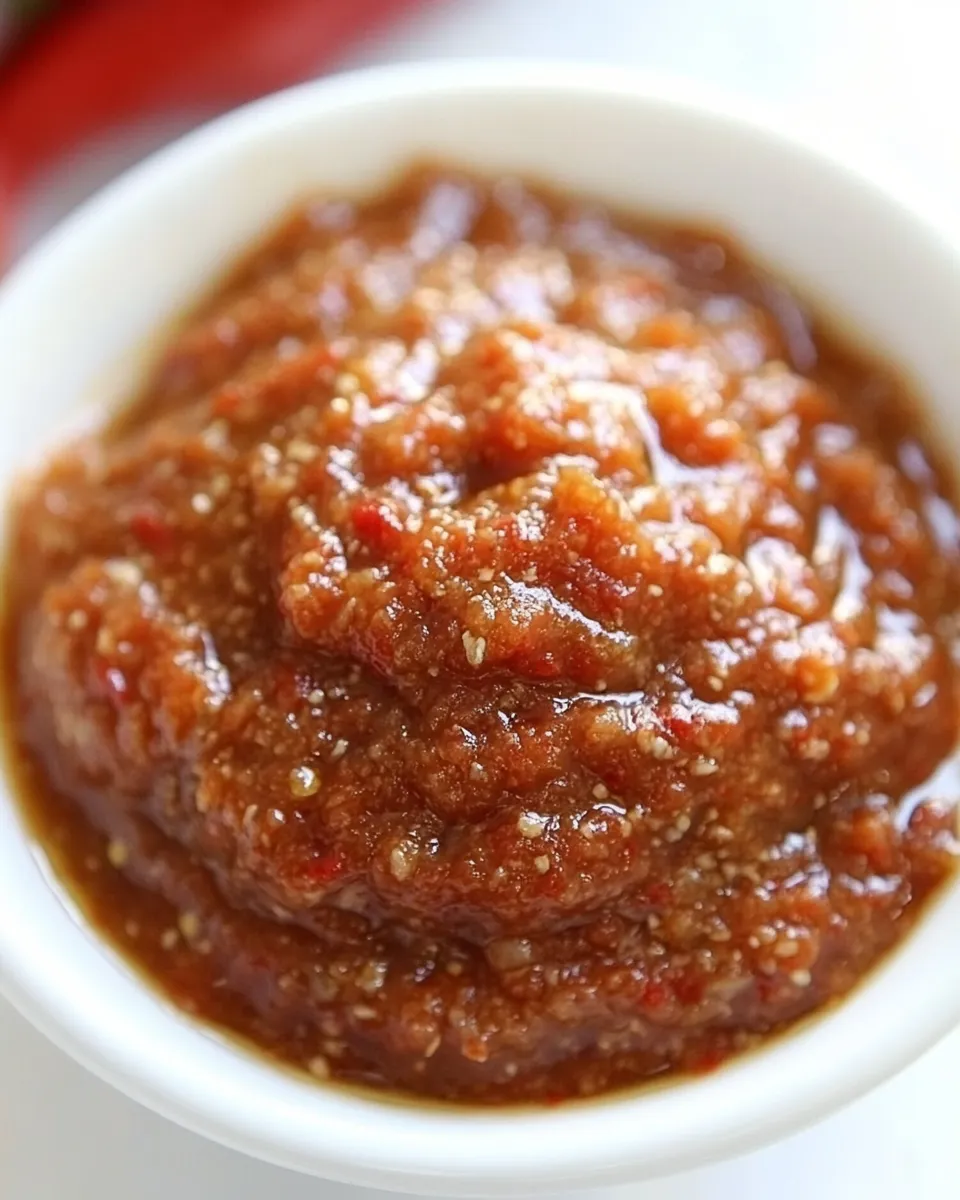
Sambal is a beloved condiment that hails from Southeast Asia, particularly Indonesia and Malaysia. It’s a fiery blend of chilies that can elevate your dishes with a burst of flavor and heat. With its versatility, sambal can be used as a dipping sauce, a marinade, or an ingredient to spice up your favorite meals. Today, I’m sharing my go-to sambal recipe that’s sure to become a staple in your kitchen. Let’s dive into the world of sambal!
Why It’s My Go-To
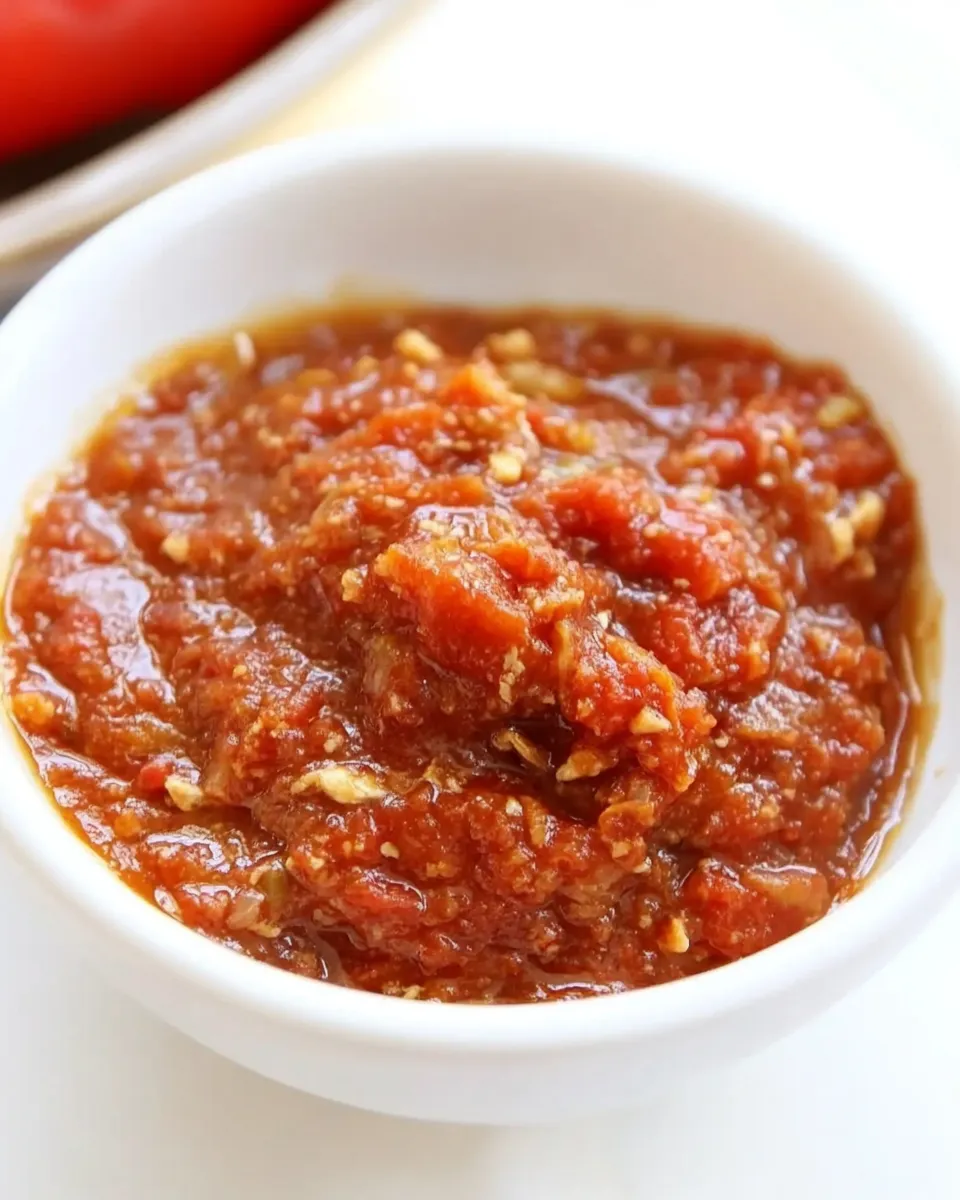
Sambal is more than just a sauce; it’s a flavor explosion that brings life to any dish. The combination of dried and fresh chilies creates a depth of flavor that you simply can’t achieve with store-bought sauces. Whether you’re adding it to grilled meats, stir-fries, or even soups, sambal adds an irresistible kick. Plus, it’s super easy to make, and you can customize the heat level to your liking.
Ingredients at a Glance
- 20 dried chilies: Seeded and soaked to soften. These provide the base heat and flavor.
- 10 fresh red chilies: Seeded and sliced. They add freshness and brightness to the sambal.
- 8 shallots: Peeled and chopped. Shallots bring a subtle sweetness and depth.
- 4 cloves garlic: Peeled and chopped. Garlic adds a robust flavor that complements the chilies.
- 1 teaspoon belacan: Break into small bits. This fermented shrimp paste adds umami and depth.
- 1/3 cup (6 tablespoons) cooking oil: For frying the sambal to bring out the flavors. Use a neutral oil.
Tools & Equipment Needed
- Blender or Food Processor: To blend the sambal ingredients into a smooth paste.
- Frying Pan: For cooking the sambal and allowing the flavors to meld.
- Measuring Cups and Spoons: To ensure accurate ingredient measurements.
- Knife and Cutting Board: For chopping the shallots and garlic.
Sambal, Made Easy
Step 1: Prepare the Dried Chilies
Start by soaking the dried chilies in warm water for about 30 minutes or until they are soft. Once softened, drain and remove the seeds for a milder sambal.
Step 2: Blend the Ingredients
In a blender or food processor, combine the soaked dried chilies, fresh red chilies, chopped shallots, chopped garlic, and belacan. Blend until you achieve a smooth paste. You may need to add a little water to help the blending process.
Step 3: Cook the Sambal
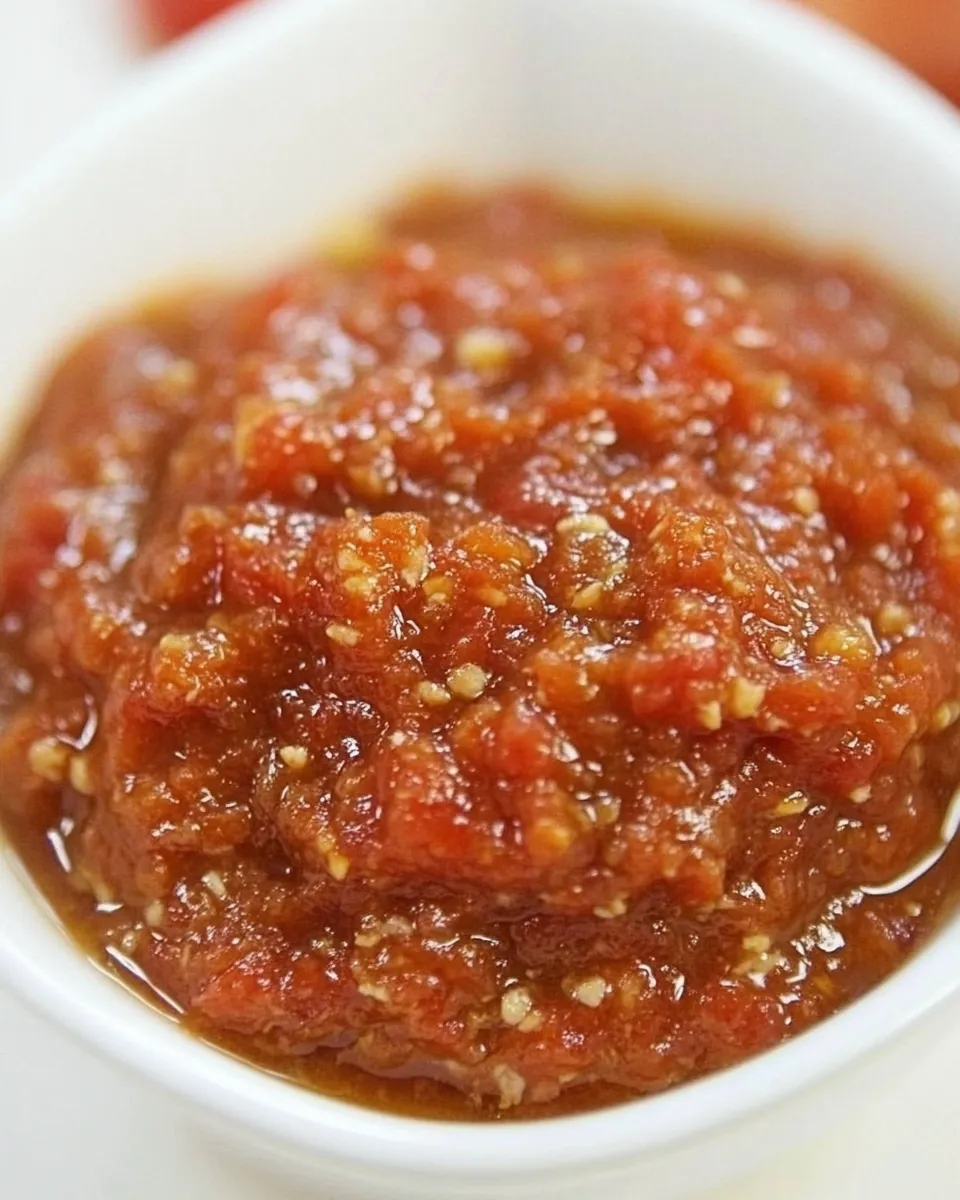
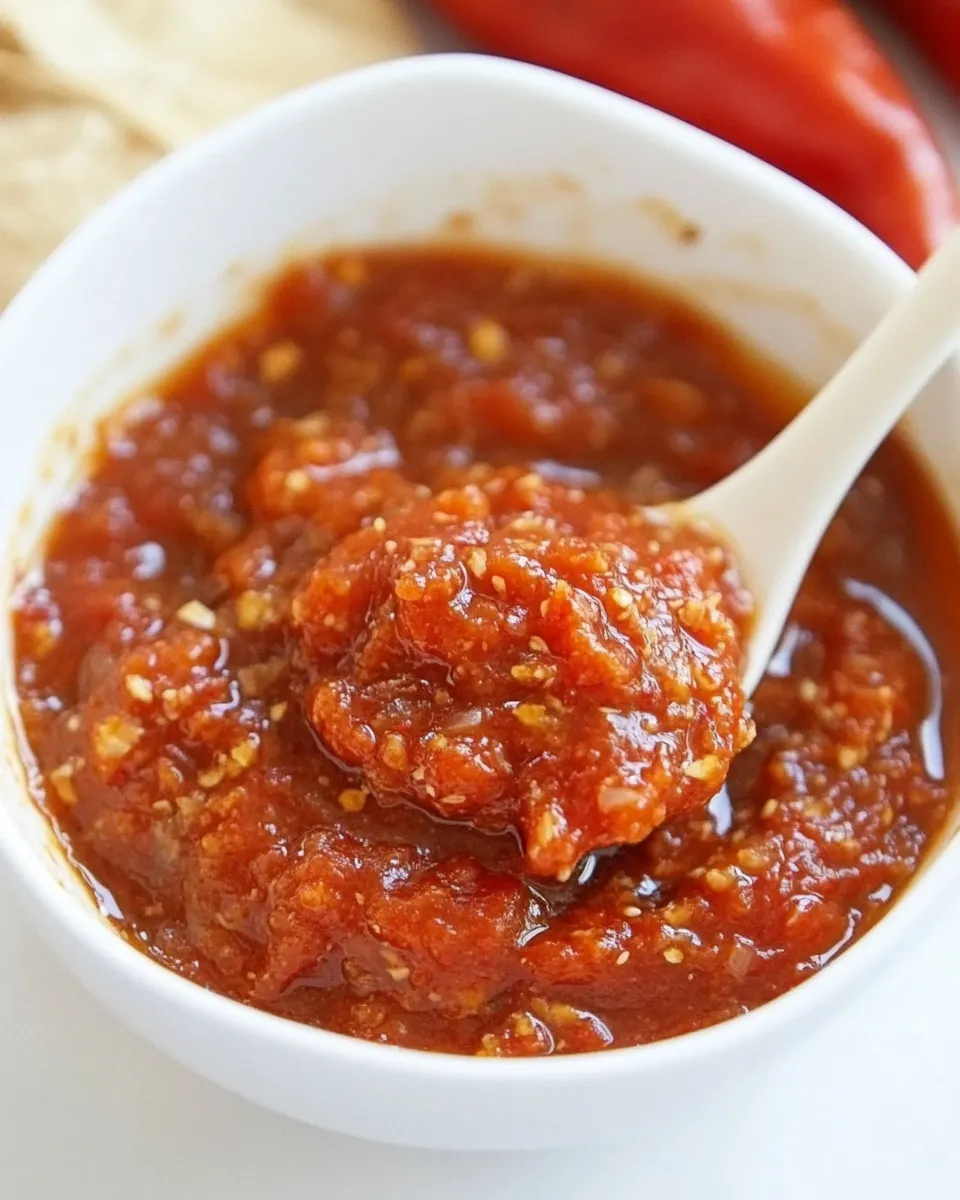
In a frying pan, heat the cooking oil over medium heat. Once hot, add the blended sambal mixture. Cook for about 10-15 minutes, stirring frequently, until the sambal thickens and the oil begins to separate from the paste. This step is crucial as it deepens the flavors.
Step 4: Cool and Store
Remove the sambal from the heat and let it cool. Once cooled, transfer it to a clean jar. It can be stored in the refrigerator for up to two weeks, allowing the flavors to intensify over time.
In-Season Flavor Ideas
To personalize your sambal, consider incorporating some seasonal ingredients:
- Lime Juice: Add a splash for brightness and acidity.
- Fresh Herbs: Cilantro or mint can give your sambal a refreshing twist.
- Tamarind Paste: For a tangy addition that pairs well with the heat.
- Brown Sugar: A touch of sweetness balances the heat beautifully.
Missteps & Fixes
Sambal is generally straightforward to make, but here are a few common missteps and how to fix them:
- Too Spicy: If your sambal turns out too spicy, you can balance it by adding a bit of sugar or more shallots to mellow the heat.
- Too Oily: If your sambal is too oily, try cooking it longer to let some of the oil evaporate, or add more chili paste to absorb the excess oil.
- Too Thick: If the sambal is too thick, add a small amount of water or oil while cooking to reach your desired consistency.
- Too Bland: If it lacks flavor, adjust with salt or more belacan to enhance the umami profile.
Leftovers & Meal Prep
Sambal is perfect for meal prep because it improves in flavor as it sits. Here are some tips for storing and using leftovers:
- Storage: Keep sambal in an airtight container in the refrigerator for up to two weeks.
- Freezing: For longer storage, sambal can be frozen in ice cube trays. Once frozen, transfer to a zip-lock bag for easy portioning.
- Serving Suggestions: Use leftover sambal in marinades, dressings, or as a topping for rice and noodle dishes.
Sambal Q&A
Can I use other types of chilies for sambal?
Absolutely! You can experiment with different varieties of chilies based on your heat tolerance and flavor preference. Just keep in mind that the flavor profile may change.
How can I adjust the heat level of my sambal?
You can control the heat by adjusting the number of dried and fresh chilies used. Removing more seeds also helps reduce the spiciness. For milder sambal, consider using fewer fresh chilies.
What dishes pair well with sambal?
Sambal is incredibly versatile and pairs well with grilled meats, seafood, stir-fries, rice dishes, and even tacos. It can also be used as a dipping sauce for spring rolls or dumplings.
Can I make sambal vegan?
Yes! Simply omit the belacan or replace it with a vegan alternative such as miso paste for added umami flavor.
Save & Share
If you love this sambal recipe as much as I do, don’t forget to share it with your friends and family! Sambal is not just a condiment; it’s a way to bring people together over a shared love of delicious food. Share your sambal creations on social media, and tag your favorite foodies to spread the heat!
Sambal is a delightful addition to your culinary repertoire, and with this recipe, you have everything you need to make it at home. The balance of spicy, savory, and slightly sweet flavors makes sambal an essential condiment that can elevate any meal. So, gather your ingredients, fire up your blender, and get ready to enjoy the vibrant flavors of homemade sambal!
Sambal
Ingredients
Equipment
Method
- Step 1: Prepare the Dried Chilies. Soak the dried chilies in warm water for about 30 minutes until soft, then drain and remove the seeds.
- Step 2: Blend the Ingredients. In a blender or food processor, combine the soaked dried chilies, fresh red chilies, chopped shallots, chopped garlic, and belacan. Blend until smooth, adding a little water if necessary.
- Step 3: Cook the Sambal. Heat cooking oil in a frying pan over medium heat. Add the blended sambal mixture and cook for 10-15 minutes, stirring frequently, until thickened and oil separates.
- Step 4: Cool and Store. Let the sambal cool before transferring to a clean jar. Store in the refrigerator for up to two weeks.
Notes
- Adjust the heat by varying the number of chilies used.
- Store sambal in an airtight container to prolong freshness.
- Sambal can be frozen in ice cube trays for easy portioning.