Homemade White Bread
There’s something incredibly satisfying about making your own bread at home. The aroma that fills your kitchen, the warmth of freshly baked bread, and the joy of sharing it with loved ones are all worth the effort. Today, we’re diving into the art of baking Homemade White Bread. This recipe is approachable for beginners yet rewarding for seasoned bakers. Let’s get started on this delightful journey!
Why Homemade White Bread is Worth Your Time
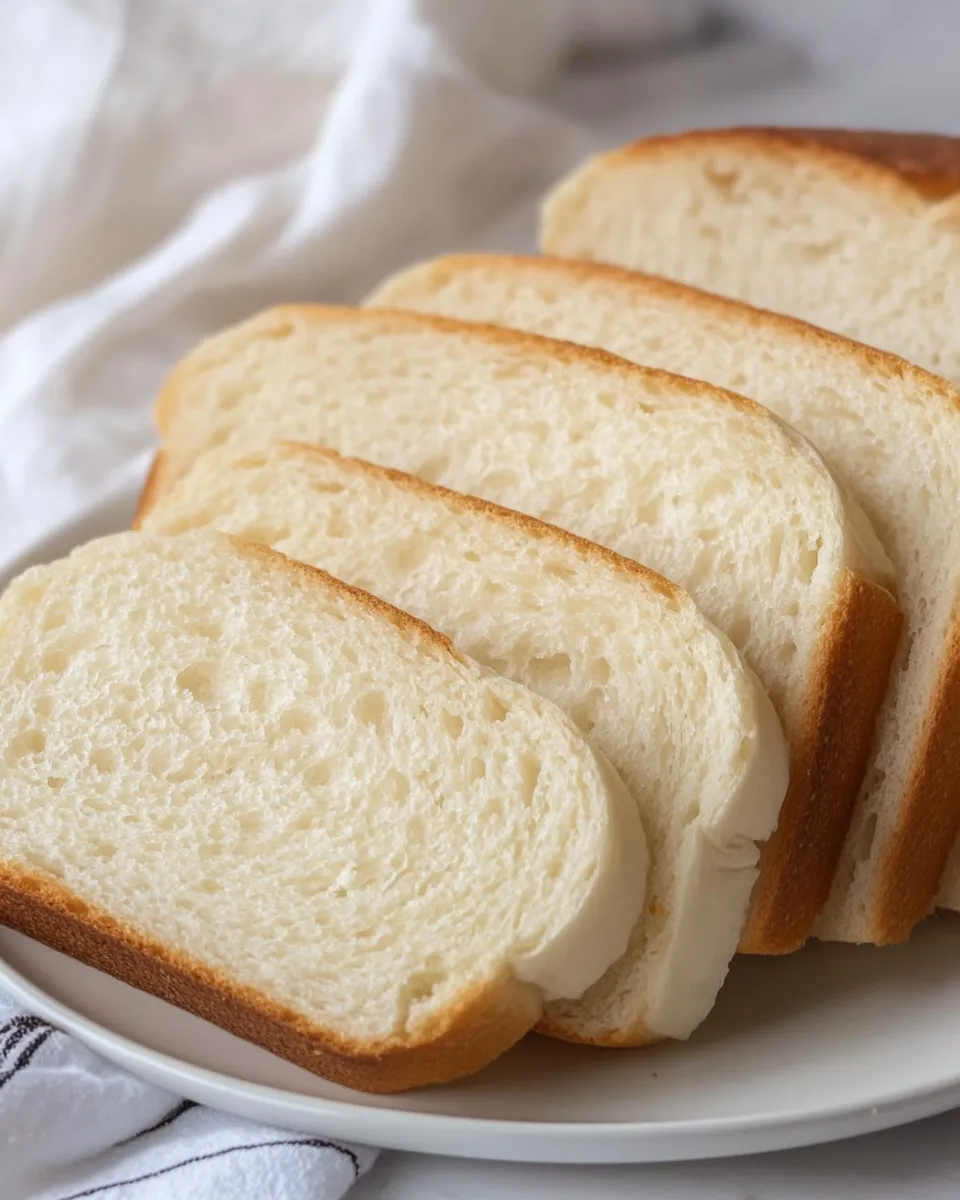
Homemade white bread is not just any bread; it’s an experience wrapped in warmth and love. When you bake at home, you have control over the ingredients, ensuring freshness and quality. Plus, the process itself can be therapeutic. Kneading the dough, watching it rise, and finally pulling a golden loaf out of the oven is immensely gratifying. Not to mention, Homemade White Bread is perfect for sandwiches, toast, or simply enjoying with a pat of butter.
What’s in the Bowl
To make your own Homemade White Bread, you’ll need the following ingredients:
- 2-1/2 to 3 cups bread flour or all-purpose flour, measured using the spoon-and-level method
- 2-1/4 teaspoons active dry yeast (1 packet)
- 2 tablespoons honey or granulated sugar, divided
- 1 cup warm water (105 to 110 degrees F), divided
- 3 tablespoons unsalted butter, divided (plus additional for pan)
- 1-1/2 teaspoons table salt
- 3 tablespoons dry milk powder
Tools & Equipment Needed
Before we begin, gather these essential tools:
- Mixing bowl: A large bowl for mixing your dough.
- Measuring cups and spoons: For precision in your ingredients.
- Wooden spoon or spatula: To mix the dough.
- Kitchen thermometer: To check the temperature of your water.
- Loaf pan: To shape your bread.
- Kitchen towel: For covering the dough while it rises.
- Oven mitts: Safety first when handling hot pans!
How to Prepare Homemade White Bread
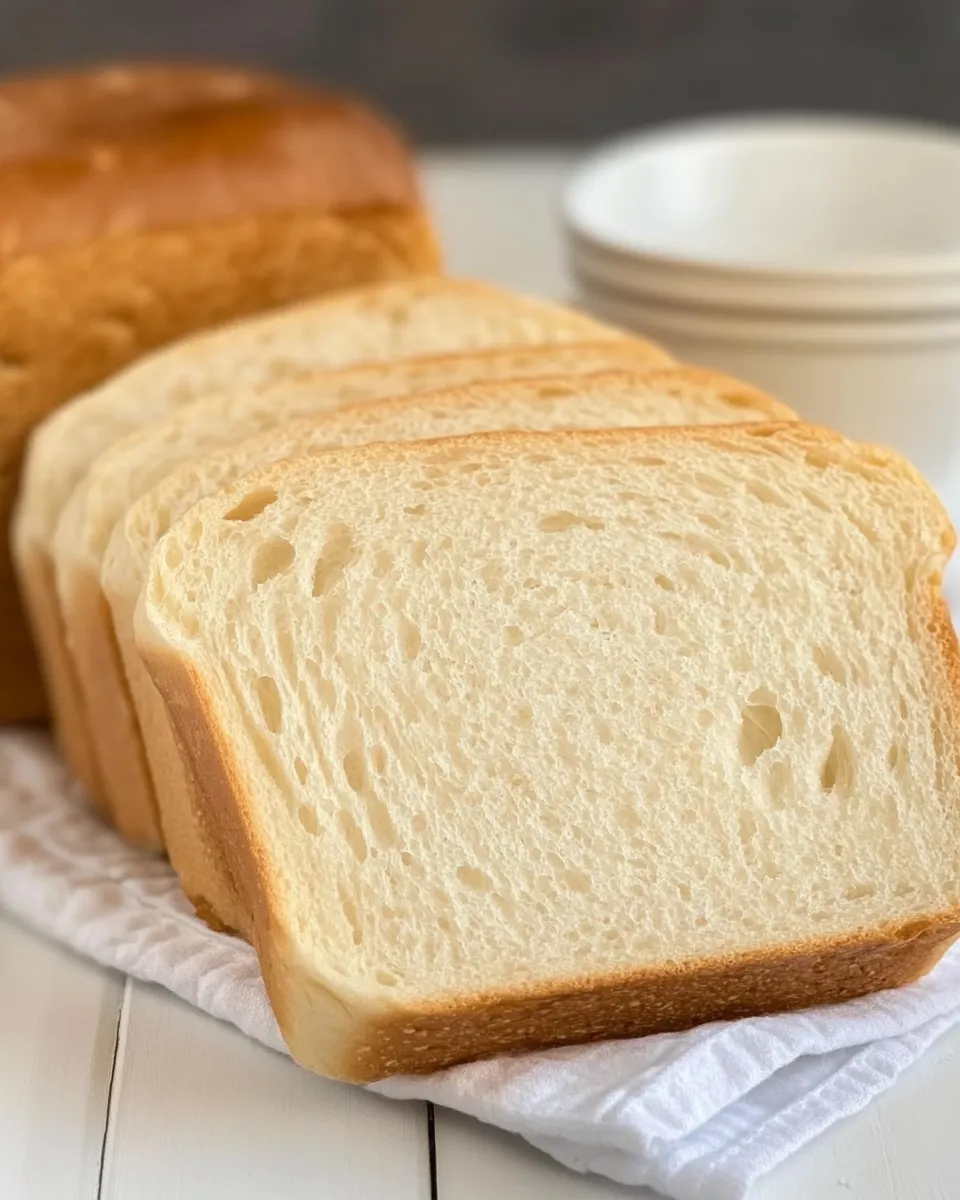
Now that you have everything ready, let’s get into the nitty-gritty of making Homemade White Bread.
1. Activate the Yeast
In a small bowl, combine 1/4 cup of warm water (105 to 110 degrees F) with 2 tablespoons of honey or sugar. Sprinkle the active dry yeast over the water and let it sit for about 5-10 minutes until it becomes foamy.
2. Mix the Dough
In a large mixing bowl, combine 2 cups of flour, dry milk powder, and salt. Create a well in the center and add the yeast mixture, the remaining 3/4 cup of warm water, and 2 tablespoons of melted butter. Mix with a wooden spoon or spatula until a shaggy dough forms.
3. Knead the Dough
Transfer the dough to a lightly floured surface. Knead the dough for about 8-10 minutes, adding flour as necessary, until it is smooth and elastic. You can also use a stand mixer with a dough hook for this step.
4. First Rise
Shape the dough into a ball and place it in a greased bowl, turning to coat. Cover with a kitchen towel and let it rise in a warm place for about 1-2 hours, or until it has doubled in size.
5. Shape the Loaf
Once risen, punch down the dough gently to release the air. Transfer it to a floured surface and shape it into a loaf. Place the shaped dough into a greased loaf pan.
6. Second Rise
Cover the loaf with a towel and let it rise for another 30-45 minutes, until it has risen just above the rim of the pan.
7. Preheat the Oven
About 20 minutes before baking, preheat your oven to 350 degrees F.
8. Bake the Bread
Once your oven is hot, bake the bread for 30-35 minutes, or until the top is golden brown and sounds hollow when tapped. If the top browns too quickly, tent it with foil.
9. Cool Down
Remove the bread from the oven and let it cool in the pan for about 10 minutes. Then, transfer it to a wire rack to cool completely before slicing.
Spring to Winter: Ideas
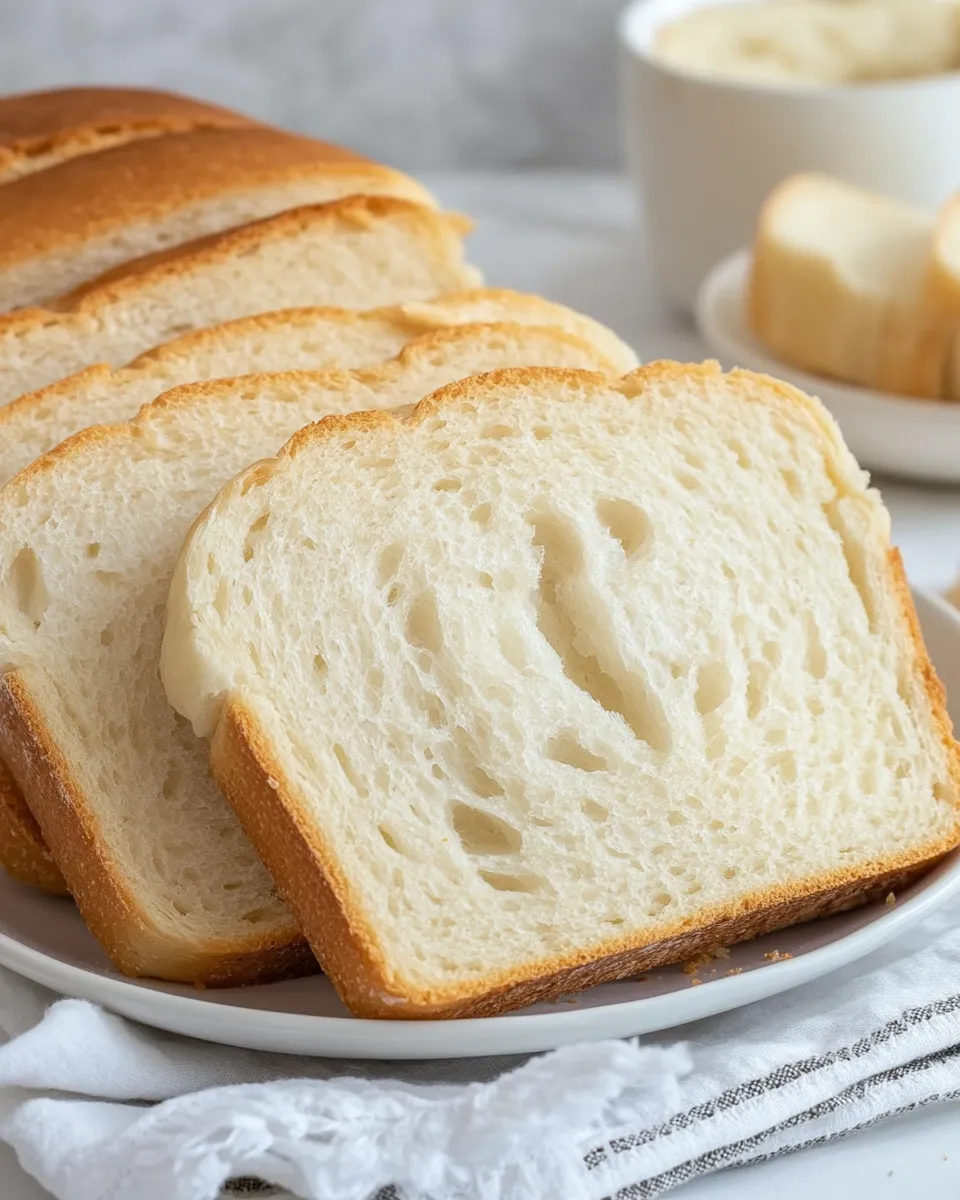
Now that you have your Homemade White Bread, here are some delightful ideas to enjoy it year-round:
- Spring: Serve with fresh spring salads as a light lunch option.
- Summer: Make classic sandwiches for picnics in the park.
- Fall: Pair with homemade soups for a cozy dinner.
- Winter: Toast slices and top with warm, spiced apple butter.
Flavor Logic
The beauty of Homemade White Bread lies in its simplicity. The combination of flour, yeast, water, and a touch of sweetness creates a blank canvas for flavor. You can experiment with different add-ins, such as herbs, garlic, or even cheese. The addition of dry milk powder enhances the bread’s moisture and tenderness, giving it that soft, pillowy texture we all love.
Storing Tips & Timelines
To keep your Homemade White Bread fresh and delicious, consider these tips:
Store the bread at room temperature in a bread box or wrapped in a kitchen towel for up to 3 days. You can also wrap it tightly in plastic wrap or aluminum foil and freeze it for up to 3 months. To enjoy frozen bread, simply thaw it at room temperature or pop it directly into the toaster for a quick warm-up.
Ask the Chef
Can I use instant yeast instead of active dry yeast?
Yes, you can substitute instant yeast for active dry yeast. Use the same amount, but you don’t need to proof it in water first. Just mix it directly with the dry ingredients.
What if my bread doesn’t rise?
If your bread doesn’t rise, it could be due to inactive yeast, incorrect water temperature, or a cold environment. Always check the expiration date of your yeast and ensure your water is warm, not hot. Try placing the dough in a slightly warm oven for better results.
Can I add whole wheat flour to this recipe?
Absolutely! You can substitute up to 1/2 of the bread flour with whole wheat flour. Just be aware that it may result in a denser loaf.
How do I know when my bread is done baking?
Your bread is done when the top is golden brown, and it sounds hollow when tapped on the bottom. A kitchen thermometer can also help; the internal temperature should be around 190 to 200 degrees F.
Before You Go
Baking Homemade White Bread is a rewarding experience that fills your home with warmth and aroma. Whether you’re enjoying it fresh out of the oven or using it for sandwiches, this bread is sure to become a staple in your kitchen. Don’t forget to experiment with different flavors and toppings to make it your own. Happy baking!
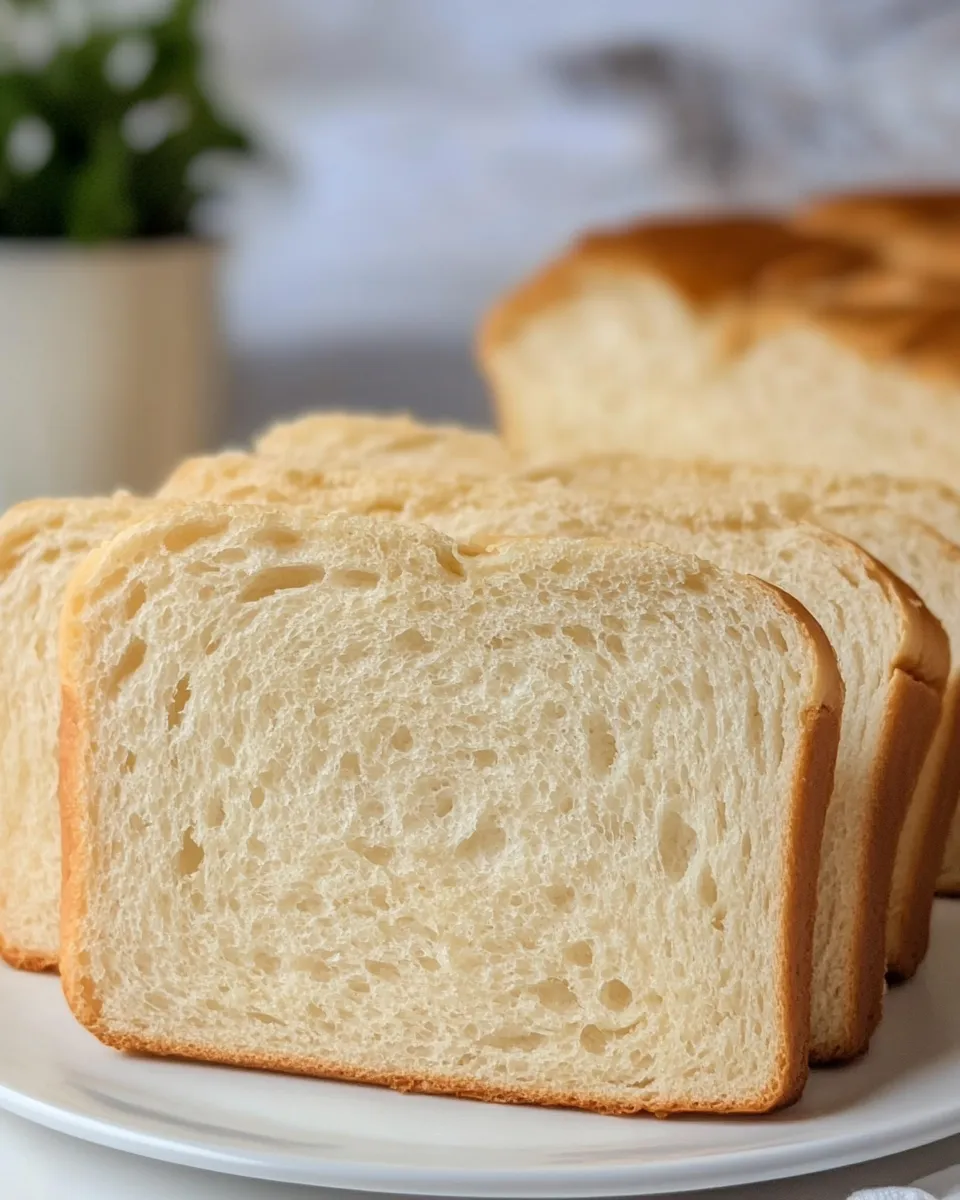
Homemade White Bread
Ingredients
Equipment
Method
- 1. Activate the Yeast: In a small bowl, combine 1/4 cup of warm water (105 to 110 degrees F) with 2 tablespoons of honey or sugar. Sprinkle the active dry yeast over the water and let it sit for about 5-10 minutes until it becomes foamy.
- 2. Mix the Dough: In a large mixing bowl, combine 2 cups of flour, dry milk powder, and salt. Create a well in the center and add the yeast mixture, the remaining 3/4 cup of warm water, and 2 tablespoons of melted butter. Mix with a wooden spoon or spatula until a shaggy dough forms.
- 3. Knead the Dough: Transfer the dough to a lightly floured surface. Knead the dough for about 8-10 minutes, adding flour as necessary, until it is smooth and elastic. You can also use a stand mixer with a dough hook for this step.
- 4. First Rise: Shape the dough into a ball and place it in a greased bowl, turning to coat. Cover with a kitchen towel and let it rise in a warm place for about 1-2 hours, or until it has doubled in size.
- 5. Shape the Loaf: Once risen, punch down the dough gently to release the air. Transfer it to a floured surface and shape it into a loaf. Place the shaped dough into a greased loaf pan.
- 6. Second Rise: Cover the loaf with a towel and let it rise for another 30-45 minutes, until it has risen just above the rim of the pan.
- 7. Preheat the Oven: About 20 minutes before baking, preheat your oven to 350 degrees F.
- 8. Bake the Bread: Once your oven is hot, bake the bread for 30-35 minutes, or until the top is golden brown and sounds hollow when tapped. If the top browns too quickly, tent it with foil.
- 9. Cool Down: Remove the bread from the oven and let it cool in the pan for about 10 minutes. Then, transfer it to a wire rack to cool completely before slicing.
Notes
- Store the bread at room temperature in a bread box or wrapped in a kitchen towel for up to 3 days.
- You can wrap it tightly in plastic wrap or aluminum foil and freeze it for up to 3 months.
- For frozen bread, thaw it at room temperature or pop it directly into the toaster for a quick warm-up.